What Is Business Intelligence and Why Your Company Needs It in 2026

In 2026, companies that do not use data to make decisions are competing at a disadvantage.
While some organizations optimize costs and identify opportunities in real time, others still rely on isolated spreadsheets and manual reports.
This is where Business Intelligence (BI) comes in.
What Is Business Intelligence?
Business Intelligence is a set of tools and processes that transform data into clear, visual, and actionable information.
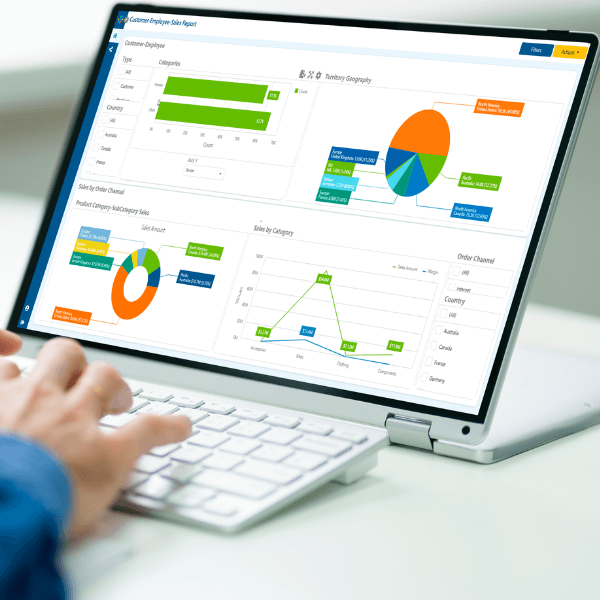
Through business dashboards, BI centralizes key information such as:
- Sales
- Costs
- Profitability
- Inventory
- Productivity
- Strategic KPIs
In simple terms: it turns data into smart decisions.
How Does a BI Tool Work?
Business Intelligence software connects multiple data sources (ERP, CRM, Excel, accounting systems, e-commerce platforms) and integrates them into a single visual dashboard.
This allows companies to:
- Automate reports
- Visualize metrics in real time
- Detect trends
- Analyze performance by department
- Make data-driven strategic decisions
Instead of waiting for end-of-month reports, you can see what is happening today.
Excel vs Business Intelligence
Many companies use Excel as their primary analysis tool. The problem is that:
- Files are not centralized
- Reports are created manually
- Information becomes outdated quickly
- Time is wasted consolidating data
BI eliminates these issues by automating processes and delivering real-time insights.
Excel organizes data.
Business Intelligence creates business insight.
Benefits of Business Intelligence
Implementing BI in your company can deliver:
- Higher profitability
- Reduced operational costs
- Better financial control
- Faster decision-making
- Greater competitiveness
Data-driven companies are more adaptable and scalable.
Is BI Only for Large Companies?
No.
Today, BI tools are designed for:
- Small and medium-sized businesses
- Startups
- Mid-sized companies
- Sales teams
- Finance departments
Access to business intelligence is no longer exclusive to large corporations.
The Cost of Not Using Business Intelligence
Not implementing BI can lead to:
- Decisions based on intuition
- Missed opportunities
- Lack of financial control
- Operational inefficiency
- Disorganized growth
In competitive markets, information is power.
Conclusion
Business Intelligence is not just a technological tool.
It is a strategic advantage.
In 2026, the question is not whether you need BI.
The question is how much you are losing by not having it.
Request a demo and start measuring what really matters.
Recent Articles

Fewer Reports, More Impact
June 13, 2025